Strata Cleaning Sydney – What Owners Corporations Must Demand from Their Cleaner in 2026

TL;DR

Strata cleaning in Sydney covers common areas including lobbies, lifts, car parks, stairwells, and shared amenities. Under the 2026 NSW strata reforms, Owners Corporations must ensure their cleaning contractor holds $20M public liability insurance, a valid Safe Work Method Statement, and Cm3 or equivalent contractor pre-qualification. Providers who pay referral commissions to strata managers must now be disclosed to lot owners – a rule that favours commission-free local operators. Mercy Property Care delivers strata cleaning across Western Sydney with all compliance documentation provided before first visit.

Why strata cleaning in Sydney changed in 2026 — and what it means for your building

Strata cleaning in Sydney is not the same conversation it was two years ago.

NSW Fair Trading rolled out strata management reforms across three stages – July 2025, October 2025, and April 2026 — that directly changed how cleaning contractors are selected, disclosed, and approved for common property work. For Owners Corporations in Parramatta, Blacktown, Penrith, and across Western Sydney, the reforms created a compliance gap that most buildings have not yet addressed.

Here is the short version: if your strata manager receives a referral fee or commission from your cleaning contractor, that arrangement must now be disclosed to lot owners, approved by the committee, and recorded in a register. Strata managers who engage commission-free cleaning providers — providers like Mercy Property Care — can do so without disclosure, without committee approval, and without a register entry. That is a meaningful administrative difference for any strata manager handling multiple buildings.

This shift means the criteria for selecting a strata cleaner in Sydney have expanded. Price and availability are still part of the decision. But compliance documentation, insurance, and commission transparency have become equally important — and lot owners now have the standing to ask questions they previously could not.

What does strata cleaning in Sydney actually cover?

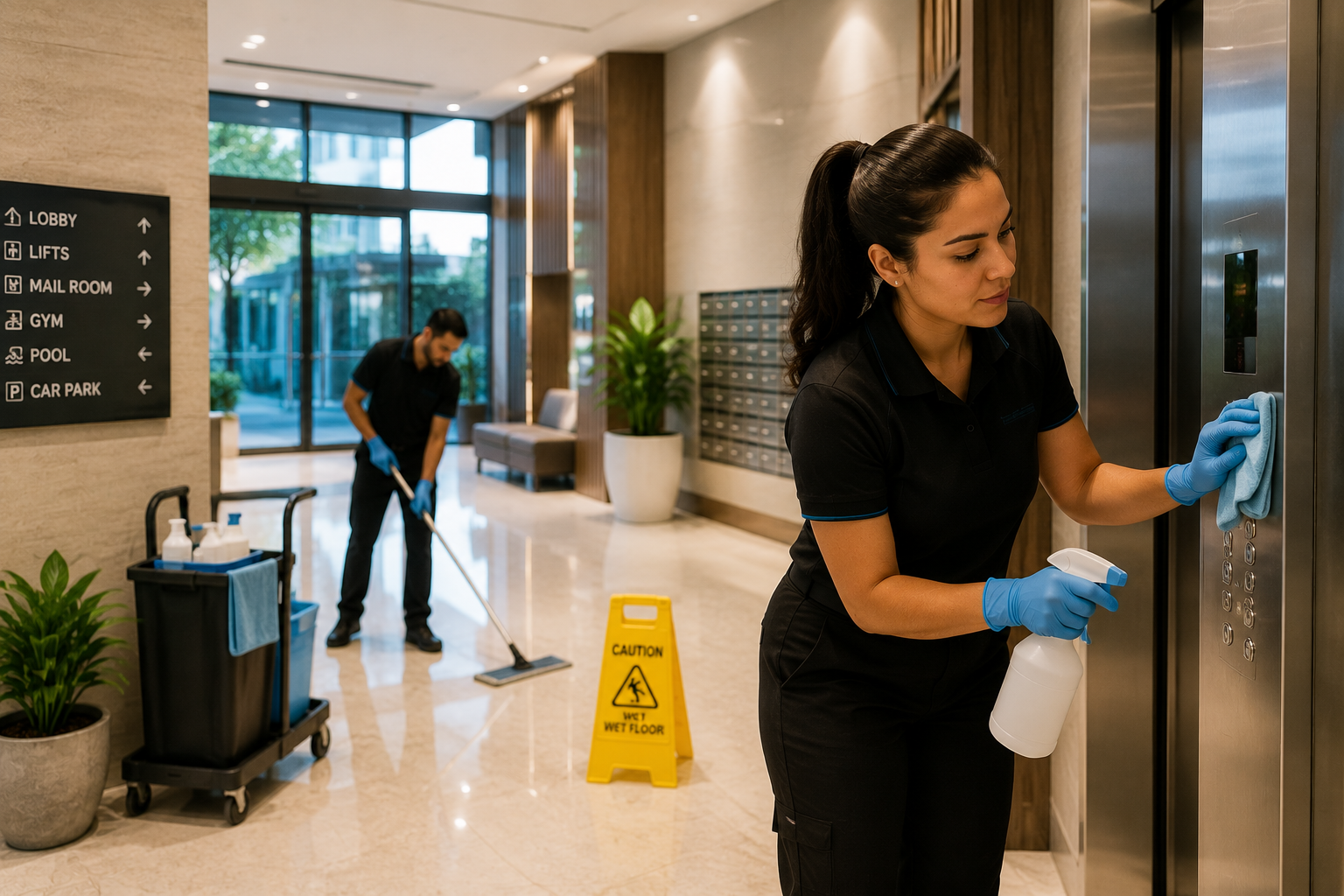
Direct answer: Strata cleaning in Sydney covers all common property — the areas owned collectively by lot owners rather than individually. This includes lobbies, lifts, stairwells, car parks, bin rooms, mail areas, pool surrounds, gym facilities, rooftop terraces, and shared amenities.

The scope varies significantly between building types. A residential apartment block in Parramatta may need daily lobby cleaning and weekly car park maintenance. A mixed-use strata development in the Hills District with ground-floor retail may need multiple daily service windows across different zones.

The key areas in any strata cleaning scope in Sydney:

  • Lobby and entry areas — daily cleaning for most buildings with ground-floor foot traffic; every contact surface disinfected
  • Lifts — daily interior wipe and floor clean; weekly track and button-panel deep clean; monthly overhead diffuser clean
  • Stairwells and fire exits — weekly sweep and mop; handrail disinfection; emergency exit signage and landing areas clear
  • Car parks — weekly blow-down and mop of main traffic lanes; monthly full-bay sweep; oil spot treatment as required
  • Bin rooms and waste areas — weekly clean and disinfection; odour management; pest-prevention protocol
  • Pool and gym common areas — daily surface wipe; floor clean; consumable restocking (soap, hand sanitiser, towel bins)
  • Mail areas and common corridors — daily or 3× per week depending on traffic

A professional strata cleaner in Sydney should provide a written scope of work that specifies every area, the cleaning frequency, and the products used — before the contract starts.

What compliance does a strata cleaner in Sydney need to hold?

Direct answer: The minimum compliance standard for a strata cleaning contractor in Sydney is $20M public liability insurance, a site-specific Safe Work Method Statement (SWMS), and Cm3 or equivalent contractor pre-qualification.

The 2026 NSW strata reforms did not change the underlying safety and insurance obligations — those have been in place under the Work Health and Safety Act 2011 and the Strata Schemes Management Act 2015 for years. What changed is the transparency requirement around contractor selection, which now makes the following documentation easier to demand and verify.

Compliance checklist for a Sydney strata cleaning provider:

  • $20M public liability insurance — minimum AU standard for common property work; ask for a current certificate of currency, not just confirmation
  • Workers compensation insurance — mandatory for any provider with employees; self-employed sole traders are excluded by law, which creates risk for Owners Corporations
  • Safe Work Method Statement (SWMS) — site-specific document identifying hazards, controls, and the safe process for each cleaning task on your building
  • Cm3 pre-qualification — or equivalent third-party contractor management platform; confirms insurance, WHS compliance, and licences are current and verified
  • Police checks for all staff — required for buildings with residential tenants or where staff access private or secure areas
  • COVID-19 and infection control protocols — documented, not verbal; particularly relevant for buildings where NDIS participants or elderly residents live

Asking for this documentation before signing a cleaning contract is not excessive. Any provider who hesitates to supply it is not a provider whose staff you want in your building’s common areas.

How do the 2026 NSW strata reforms specifically affect cleaning contract selection?

Direct answer: The reforms require strata managers to disclose commissions or referral fees received from contractors, obtain committee approval where a conflict of interest exists, and maintain a disclosure register accessible to lot owners. Commission-free cleaning contractors can be engaged without triggering these requirements.

For Owners Corporations, this reform creates a straightforward filter when evaluating cleaning providers: ask your strata manager directly whether any arrangement exists between them and the cleaning company they recommend. Under the reforms, they are legally required to disclose it.

For cleaning providers, the reforms reward transparency. A strata cleaning company in Sydney that does not pay referral commissions is administratively simpler to engage — and is now required to say so, either explicitly or by the absence of any disclosure requirement.

Mercy Property Care does not pay referral fees to strata managers. Our strata cleaning contracts are quoted directly to the Owners Corporation or building manager based on scope, frequency, and compliance requirements — no commission arrangements, no required disclosures, no committee approval threshold triggered.

What should a strata cleaning schedule look like for a Sydney building?

Direct answer: Most Sydney strata buildings need a minimum of 3× weekly lobby cleaning, weekly lift and stairwell maintenance, and monthly car park and bin room deep cleaning — scaled up for buildings above 50 lots or with high foot traffic.

Frequency is one of the most poorly specified elements in Sydney strata cleaning contracts. Many contracts describe tasks without defining frequency, creating ambiguity when a lot owner questions whether their bin room has been cleaned this week.

Suggested minimum schedule for a 20–50 lot Sydney strata building:

Area Frequency Notes
Lobby and entry 3× weekly Daily for ground-floor retail or concierge buildings
Lifts 3× weekly Daily for high-rise or 100+ lot buildings
Stairwells Weekly Include handrails and landings
Car park Monthly sweep + weekly lane blow Oil spots treated as required
Bin room Weekly Disinfection included — not just sweeping
Pool and gym Daily Consumable restocking included in scope
Common corridors 3× weekly Mail areas included
Windows (external) Quarterly Specialist rope access for upper floors

Every item on this list should appear in your contract with a frequency specified. A contract that says “regular cleaning” without frequency is not a compliance document — it is a dispute waiting to happen.

For buildings in Parramatta, Blacktown, Penrith, the Hills District, and surrounding Western Sydney suburbs, Mercy Property Care provides strata cleaning services in Sydney with written scope, confirmed frequencies, and all compliance documentation supplied before the first visit.

What does Mercy Property Care’s strata cleaning service include in Western Sydney?

Mercy Property Care is a Western Sydney-based cleaning company operating from Toongabbie, led by Priyanka Kumar. The team provides strata cleaning across Parramatta, Blacktown, Penrith, Castle Hill, the Hills District, and surrounding suburbs — with commercial cleaning services covering the full range of commercial property types.

What distinguishes the Mercy Property Care strata service:

Consistent teams. The same people on the same building every visit. This matters in strata because staff who know the building spot anomalies — a lift malfunctioning, a bin room accumulation before collection day, a lobby light out — that a rotating team would miss.

Written scope and service records. Every strata cleaning contract includes a written scope of work with specified frequencies and a post-service record after every visit. For Owners Corporations who need to demonstrate due diligence at an AGM or respond to a lot owner complaint, these records matter.

No commission arrangements. Mercy Property Care does not pay referral commissions to strata managers. Contracts are quoted directly on merit — scope, frequency, compliance, and value.

NDIS registration. For mixed-use strata buildings where NDIS participants live or receive services, Mercy Property Care’s registered NDIS provider status means a single provider relationship can cover both strata common areas and individual participant home cleaning — reducing coordination overhead for building managers and support coordinators. For more on NDIS cleaning in Sydney, visit the NDIS cleaning service page.

Frequently Asked Questions

Q: What is strata cleaning in Sydney and what areas does it include? A: Strata cleaning in Sydney refers to professional cleaning of common property areas in strata-titled buildings — lobbies, lifts, car parks, stairwells, bin rooms, pool surrounds, gyms, and shared corridors. It does not include individual lot interiors. Cleaning frequency and scope should be specified in a written contract before work starts. Most Sydney strata buildings of 20+ lots require at least 3× weekly service across key common areas.

Q: What insurance does a strata cleaning company in Sydney need? A: The minimum is $20M public liability insurance with a current certificate of currency. Workers compensation insurance is also required for any provider with employees. Ask for both certificates before signing any strata cleaning contract in Sydney — not just verbal confirmation. A provider who cannot supply current certificates is not compliant with standard strata contractor requirements under NSW law.

Q: How did the 2026 NSW strata reforms affect cleaning contracts? A: The reforms, rolled out by NSW Fair Trading across July 2025, October 2025, and April 2026, require strata managers to disclose any commission or referral fee received from contractors to lot owners. If a conflict of interest exists, the engagement requires committee approval and a disclosure register entry. Strata cleaning providers who do not pay commissions to strata managers can be engaged without triggering these requirements — making them administratively simpler to use.

Q: How do I know if my strata building is getting a compliant clean? A: Request a copy of your cleaning contractor’s current public liability certificate, workers compensation certificate, site-specific SWMS, and Cm3 pre-qualification. Then request the last three service records showing what was cleaned, when, and by whom. If your contractor cannot supply all of these within 48 hours, your building is carrying compliance risk. Mercy Property Care supplies all of this documentation as standard — call 1300 973 856 to compare your current arrangement.

Q: Does Mercy Property Care service strata buildings across all of Western Sydney? A: Yes. Mercy Property Care provides strata cleaning across Parramatta, Blacktown, Penrith, Castle Hill, Toongabbie, the Hills District, Liverpool, and surrounding Western Sydney suburbs. Free on-site assessments include a written scope, compliance documentation package, and fixed pricing before any commitment. Same-week assessments are available — call 1300 973 856 or visit the cleaning services area page to check your suburb.

Get a Free Strata Cleaning Assessment for Your Western Sydney Building

The right strata cleaning contract for your building starts with a site inspection — not a phone quote. Mercy Property Care provides free, no-obligation on-site assessments for strata buildings across Western Sydney. Every assessment includes a written scope with specified frequencies, a full compliance documentation package, and fixed pricing before any commitment is made.

Book online: Strata Cleaning Services in Sydney →

Based in Toongabbie. Servicing Parramatta, Blacktown, Penrith, Castle Hill, Hills District, Liverpool, and all of Western Sydney.

Written by Mercy Property Care, Strata and Commercial Cleaning Specialists, Western Sydney.
End of Lease Cleaning Sydney — What Real Estate Agents Actually Check

TL;DR

End of lease cleaning in Sydney is judged against the property’s entry condition, not general cleanliness. Real estate agents check every surface — ovens, grout, window tracks, skirting boards, and carpets — and anything listed as clean at move-in must match that standard at move-out. For most Western Sydney rentals, a professional end of lease clean costs $300–$600 and protects bonds of $2,000–$6,000. Mercy Property Care provides end of lease cleaning across Sydney with a bond-back guarantee.

What does an end of lease inspection actually involve in Sydney?

End of lease cleaning in Sydney is assessed against the entry condition report signed when you moved in. If the oven was noted as clean, it must be clean. If the carpets were steam-cleaned, they need to match that standard. It is not about making the property look nice — it is about returning it to documented condition.

Real estate agents in NSW conduct final inspections with a copy of the entry condition report in hand. They move through each room systematically, photographing anything that does not match. Items that get missed in a routine clean almost always get flagged at inspection.

The most commonly failed areas in Sydney end of lease inspections:

  • Kitchen: oven racks, grill, rangehood filter, behind/under appliances, splashback
  • Bathrooms: grout lines, exhaust fan covers, behind toilets, shower screen tracks
  • Living areas: skirting boards, window tracks, window sills, light fittings, ceiling fans
  • Bedrooms: built-in wardrobe tracks and shelves, marks on walls
  • Floors: carpet steam cleaning (receipt required), hard floor grout lines
  • Outdoor areas: balcony or courtyard cleaning, cobwebs on external walls

Booking a professional end of lease cleaning service in Sydney before the inspection removes the risk of missing any of these areas.

What do real estate agents actually check room by room?

The checklist below reflects what agents consistently flag in Western Sydney properties — Parramatta, Blacktown, Penrith, Toongabbie, Castle Hill, and Liverpool. It is based on the NSW standard entry condition report format.

Kitchen

  • Oven interior, racks, and grill — agents open and photograph the oven door open. Grease on racks is the most common fail.
  • Rangehood filter — a sticky, greasy filter is an automatic flag
  • Inside and behind the refrigerator space — marks or spills on the wall behind where the fridge stood
  • Cupboard shelves and drawer tracks
  • Sink and tap base — soap scum buildup

Bathrooms and laundry

  • Shower screen — hard water stains and soap scum on glass are the most common fail after ovens
  • Grout between tiles — discolouration is checked against the entry report
  • Exhaust fan cover — dust accumulation is almost universally missed by tenants
  • Under and behind the toilet
  • Laundry tub and washing machine connection point

Bedrooms and living areas

  • Skirting boards — dust and marks on the top edge
  • Window tracks and sills — dirt accumulation in tracks is a near-universal fail
  • Light fittings — dead insects inside diffusers
  • Ceiling fans — dust on fan blades
  • Wall marks — scuffs and marks above switches and around door handles

Carpets

  • Steam cleaning is almost always required in NSW at end of lease unless the carpets were not professionally cleaned at the start of the tenancy
  • Agents require a professional steam cleaning receipt — DIY carpet cleaning using a hired machine does not satisfy this requirement in most NSW leases
  • Stains that were not present at move-in are a separate bond claim item

What is the difference between regular cleaning and end of lease cleaning?

Regular cleaning maintains a home. End of lease cleaning restores it to entry condition for a real estate inspection standard.

The difference in scope is significant:

Task Regular Clean End of Lease Clean
Oven interior degreasing No Yes
Rangehood filter No Yes
Skirting boards No Yes
Window tracks No Yes
Grout scrubbing No Yes
Exhaust fans No Yes
Inside cupboards and drawers No Yes
Carpet steam cleaning No Yes (+ receipt)
Wall marks No Yes

A professional end of lease clean in Western Sydney covers all of these as standard. DIY cleaning typically misses 3–5 items from this list, which is enough to trigger a failed inspection. The properties in Parramatta, Blacktown, and Penrith managed by larger agencies use the same inspection checklist every time — the same items get flagged by the same agents repeatedly.

For office and commercial tenants in Sydney ending a lease, the requirements are similar but scaled — commercial cleaning across Western Sydney applies the same entry condition logic to business premises.

How much does end of lease cleaning cost in Sydney in 2026?

End of lease cleaning in Sydney typically costs between $300 and $700 depending on property size, condition, and whether carpet steam cleaning is included.

Approximate price ranges for Western Sydney properties in 2026:

Property size Estimated cost (no carpet) Estimated cost (with carpet)
1-bedroom unit $250–$350 $350–$450
2-bedroom unit or townhouse $350–$450 $450–$580
3-bedroom house $450–$600 $580–$750
4-bedroom house $550–$750 $700–$950+

Prices vary based on property condition — a home that has had regular professional cleaning throughout the tenancy will cost less to restore at end of lease than one that has not been professionally cleaned in years.

The most important comparison: the average rental bond in NSW for a 3-bedroom house in Western Sydney is $3,000–$5,000. A $500 end of lease clean that protects that bond is a strong return. A DIY clean that misses the oven and shower screen and results in a $700 bond deduction costs more.

When should I book end of lease cleaning in Sydney?

Book end of lease cleaning at least 3–5 business days before your inspection date, or ideally the day before you hand back keys.

Timing notes for Sydney tenants:

  • Carpet steam cleaning takes several hours to dry — book it the morning of the clean or the day before inspection
  • Do not book your end of lease clean before you have fully vacated the property — furniture removal leaves marks that need to be addressed
  • If you are overlapping tenancies (moving to a new property before your old lease ends), book cleaning for the end of the vacated property first
  • If you receive a failed inspection notice, NSW tenancy law gives you a reasonable time to rectify cleaning before a bond claim can be lodged. In practice, this is usually 5–7 days.

For tenants near Parramatta, Blacktown, or the Hills District, cleaning services in Parramatta can typically accommodate bookings within 24–48 hours.

Does a bond-back guarantee actually mean anything?

A bond-back guarantee from an end of lease cleaning company means the provider will return and re-clean any areas that fail inspection at no additional charge. It does not mean your bond is automatically returned — that is between you and your landlord.

What a reputable bond-back guarantee covers:

  • Re-cleaning of any item that fails inspection within the scope of the original clean
  • Return visits within a defined window (usually 48–72 hours after the failed inspection)
  • A written scope of work so you know exactly what was included

What it does not cover:

  • Damage claimed separately from cleaning
  • Carpet stains that are classified as damage rather than cleaning
  • Items that were not part of the original service scope

Always ask for the scope of work in writing before booking. A provider who cannot give you a written scope is not offering a meaningful guarantee.

Frequently Asked Questions

Q: What does end of lease cleaning in Sydney include? A: A professional end of lease clean in Sydney covers the entire property to real estate inspection standard — oven, rangehood, bathrooms including grout and exhaust fans, skirting boards, window tracks, inside cupboards, light fittings, and wall marks. Carpet steam cleaning is usually a separate quoted service but can be included. Mercy Property Care provides a written scope before every end of lease clean so you know exactly what is covered.

Q: How long does end of lease cleaning take for a Sydney property? A: A 2-bedroom unit in Sydney typically takes 4–6 hours with a professional team. A 3-bedroom house takes 6–9 hours depending on condition. Properties that have not been professionally maintained during the tenancy take longer — grout cleaning, oven degreasing, and shower screen restoration can each add 1–2 hours when the buildup is heavy. Book a full day for larger properties.

Q: Do I need carpet steam cleaning for my Sydney end of lease? A: In most NSW residential leases, yes. If the entry condition report notes carpets as professionally steam-cleaned, you are required to return them in that condition — and agents require a receipt. Hiring a machine from a supermarket does not satisfy this requirement under most leases. A professional steam clean for a standard 3-bedroom Western Sydney home costs $150–$250 and is worth it compared to a bond deduction.

Q: What is the most commonly failed item in Sydney end of lease inspections? A: The oven. Without exception, the oven is the single most commonly flagged item in Western Sydney real estate inspections. Most tenants do not degrease racks, grill trays, or the interior of the oven door glass. Agents open the oven as a matter of course on every inspection. The second most commonly failed item is the shower screen — particularly hard water staining on glass.

Q: Can Mercy Property Care clean my property at short notice? A: Mercy Property Care accepts end of lease bookings across Western Sydney — Parramatta, Blacktown, Penrith, the Hills District, Toongabbie, Liverpool, and surrounding suburbs. Availability depends on scheduling, but short-notice bookings within 24–48 hours are often possible. Call 1300 973 856 or 0257 407 688 to check availability and confirm a same-week booking.

Q: What if my property fails inspection after the professional clean? A: Mercy Property Care offers a bond-back guarantee — if any area included in the original scope fails inspection, the team returns and re-cleans at no additional charge. You must notify us within 48 hours of the failed inspection and provide the agent’s written report. The re-clean is booked within 48 hours of that notification. For more on what’s covered under the guarantee, visit the Mercy Property Care blog or call directly.

Q: Is there a difference between end of lease cleaning and bond cleaning? A: No — they are the same service. “End of lease cleaning,” “bond cleaning,” “vacate cleaning,” and “move-out cleaning” all describe the same thing: a deep clean of a rental property to the standard required by a real estate agent at the end of a tenancy. The terminology varies between agencies and suburbs, but the scope and standard are the same across Western Sydney.

Book Your End of Lease Clean in Sydney

The right time to book is before your inspection is scheduled, not after you fail one. Mercy Property Care covers end of lease cleaning across Western Sydney with a written scope, bond-back guarantee, and same-week availability.

Call: 1300 973 856 Or: 0257 407 688 Book online: End of lease cleaning service in Sydney

Based in Toongabbie. Servicing Parramatta, Blacktown, Penrith, Castle Hill, the Hills District, Liverpool, and all of Western Sydney.

How Weather Affects Your Home Cleaning Needs in Western Sydney

Weather affects your home cleaning needs in profound ways that most homeowners don’t fully appreciate until they are battling storm-driven dust, humidity-induced mold, or the relentless grime that accompanies each seasonal shift. As professional cleaners servicing Western Sydney for over 25 years, we have observed distinct cleaning challenges that emerge with each weather pattern—from the bushfire smoke that infiltrates homes during summer to the mold blooms that follow prolonged winter rain. Understanding these weather-driven requirements helps you maintain a healthier, cleaner home while reducing the need for intensive deep cleans that become necessary when seasonal issues are ignored.

Western Sydney’s unique climate presents specific challenges that differ significantly from coastal suburbs. The region experiences hotter summers, colder winters, and distinct humidity fluctuations that directly impact indoor air quality, dust accumulation, and overall home hygiene.

Summer Heat and Dust Management: The Battle Against the West

Scorching summer temperatures combined with drought conditions create unprecedented dust accumulation that transforms home cleaning requirements across Western Sydney. During peak summer months, temperatures regularly exceed 35°C, desiccating soils and creating fine dust particles that penetrate homes through windows, doors, and ventilation systems.

One of the most overlooked aspects of summer maintenance is air conditioning and filters. Intense summer usage circulates dust throughout your home at a much higher rate. To maintain high indoor air quality, filters should be cleaned or replaced every 2–3 weeks during peak usage. Furthermore, hot westerly winds deposit layers of fine grit on windows and security screens. During this time, professional window cleaning frequency should increase to ensure your views remain clear and your tracks don’t become jammed with debris.

When extreme weather affects your home cleaning needs, such as during bushfire smoke events, a standard wipe-down isn’t enough. Post-smoke events require a comprehensive protocol: washing all hard surfaces, using HEPA filter vacuuming on all upholstery, and laundering curtains to remove fine particulates that can trigger respiratory issues.

Autumn Transitions: Tackling Debris and Pest Prevention

As the heat fades, March through May brings cooler temperatures and strong winds that dislodge leaves and seed pods. In Western Sydney, properties surrounded by eucalyptus or jacaranda trees face a significant influx of organic debris.

Gutter cleaning in Western Sydney is non-negotiable during this transition. Gutters should be cleared in late April to prevent blockages before the winter rains arrive. If neglected, overflowing gutters can lead to structural water damage and damp walls. Additionally, this organic buildup near the home attracts spiders and cockroaches seeking shelter from the dropping temperatures. Clearing the perimeter and ensuring outdoor bins are sanitized are essential steps in a deep cleaning checklist for the autumn months. To stop debris at the door, heavy-duty entrance mats should be vacuumed daily to prevent “track-in” grime from ruining your carpets.

Winter Moisture and Mold: Preventing the Western Sydney “Bloom”

Cold, wet winter months transform homes into potential incubators for fungi. It is during the dampest months that weather affects your home cleaning needs most dramatically, shifting the focus from aesthetic maintenance to active mold prevention techniques.

Reduced ventilation combined with increased indoor moisture from hot showers and heating creates a high risk for mold. Bathroom ventilation is your first line of defense; running exhaust fans for 20 minutes post-shower is vital. However, you must also be vigilant about window condensation. Wiping bedroom windows daily with microfiber cloths prevents water from pooling on sills, which leads to timber rot.

In enclosed spaces like wardrobes, moisture is a silent enemy. Don’t pack your clothes too tightly; air circulation is a natural mold deterrent. Utilizing moisture absorbers and wiping down cupboard interiors with a vinegar solution provides a preventive barrier that keeps your belongings safe from the winter “mustiness” often found in older Sydney properties.

Spring Allergy Defense: HEPA Filtering and Pollen Eradication

Spring in Western Sydney is beautiful but brings a heavy pollen load from grasses and weeds. For residents sensitive to allergens, this season requires a clinical approach to cleaning. Pollen and allergy relief starts with a strict vacuuming protocol. Standard vacuums often recirculate fine particles; instead, use industrial-grade HEPA filter vacuuming to trap allergens as small as 0.3 microns.

During peak pollen season, dry dusting should be avoided as it simply pushes particles back into the air. Switch to wet dusting techniques using damp microfiber cloths to physically lift and remove the allergens from benchtops and shelving. Bedding hygiene is also paramount—wash all linens weekly in water at least 60°C to eliminate both pollen and dust mites.

Storm Season Readiness: Preparation and Emergency Response

From November through March, Western Sydney experiences intense thunderstorms. These events can overwhelm drainage systems and drive water into the most secure homes. Pre-storm preparation involves checking window seals for gaps and ensuring floor drains are clear.

If storm water does enter your home, the clock is ticking. Emergency water response requires moisture extraction within the first 24 hours to prevent permanent damage. Once the skies clear, high-pressure washing is often required for outdoor entertaining areas to remove the silt and organic sludge left behind by heavy downpours.

The Professional Advantage: Why Local Expertise Matters

While DIY maintenance is helpful, the way local weather affects your home cleaning needs often requires professional intervention. Mercy Property Care brings over 25 years of experience to the table, specifically tailored to the Western Sydney environment. Whether it is a specialized NDIS cleaning in Sydney that requires medical-grade sanitization or a high-stakes end-of-lease bond cleaning, professional cleaners have the tools—like high-reach gutter vacuums and commercial anti-fungal bathroom cleaners—to handle what the elements throw at your home.

Engaging Western Sydney cleaning services ensures that your home isn’t just surface-clean, but structurally protected against the long-term effects of our harsh climate.

Conclusion: A Proactive Approach to the Elements

Maintaining a home in Western Sydney requires more than a “one size fits all” cleaning routine. By adjusting your habits to match the seasonal shifts—from summer dust management to winter mold prevention—you protect both your property’s value and your family’s health. Staying proactive prevents the buildup of environmental contaminants and ensures your home remains a pristine sanctuary all year round.

READY TO WEATHER-PROOF YOUR HOME? Don’t let the seasons get the better of your living space. Whether you need a deep spring clean, a post-storm recovery, or a regular maintenance schedule, Mercy Property Care is the trusted local choice for Western Sydney.

Serving Toongabbie, Marsden Park, and Greater Western Sydney 

Call us today at 1300 973 856 for a free assessment! 

Visit our website to view our full range of Residential, Commercial, and NDIS Cleaning services.

[Get Your Free Quote Today]

Signs of Successful End of Lease Cleaning for Getting Your Bond Back

Successful end of lease cleaning is the difference between recovering your full bond and facing deductions that can cost hundreds or even thousands of dollars. As professional cleaners who have helped a lot of tenants secure their bonds in the past three years, we’ve witnessed firsthand what property managers scrutinize during final inspections. This comprehensive guide reveals the exact signs that indicate your property meets the stringent cleanliness standards required for bond return, drawn from real exit inspections across Western Sydney, Inner West, and Eastern Suburbs properties.

Understanding these quality indicators isn’t just about passing inspection—it’s about avoiding the financial stress of bond disputes and ensuring a smooth transition to your next home. Whether you’re tackling the clean yourself or evaluating a professional cleaning service, these benchmarks will help you achieve the pristine condition that satisfies even the most demanding real estate agents.

Kitchen Cleanliness Standards That Pass Final Inspection

Achieving a bond-approved kitchen requires meticulous attention to grease removal, appliance restoration, and sanitation that meets commercial-grade standards. The kitchen consistently ranks as the most scrutinized area during property inspections, with 73% of bond deductions in our experience stemming from inadequate kitchen cleaning. Property managers specifically look for evidence of deep cleaning rather than surface-level wiping, and they know exactly where previous tenants typically cut corners.

Oven and Stovetop Restoration: The oven must be restored to near-showroom condition, with all baked-on grease, carbon deposits, and food residue completely removed from racks, trays, glass doors, and interior surfaces. You should be able to see clear reflections in the glass door, and there should be no brown or black residue when you wipe a white cloth across any interior surface. Stovetop burners need individual removal and soaking, with burner caps showing no clogged holes and drip trays appearing like new.

Rangehood and Exhaust Systems: The rangehood filter is often the smoking gun that reveals inadequate cleaning. A successful end of lease clean includes complete filter degreasing—either by soaking in hot water with commercial degreaser or running through a dishwasher cycle at the highest temperature. The filter should be light grey or silver, not brown or sticky to touch.

Cupboards and Drawers: Every cupboard must be emptied completely (inspectors will open them) and cleaned inside with particular attention to corners, shelves, and the cupboard floor where crumbs and spills accumulate. We’ve seen bonds held due to forgotten shelf liner paper, old contact paper residue, or mouse droppings in rarely-used cupboards—all preventable with thorough inspection.

Splashback and Tile Grouting: Tiled splashbacks must be restored with grout lines returning to their original light color through specialized grout cleaning or gentle bleaching. For glass splashbacks, achieve a streak-free, crystal-clear finish using microfiber cloths and professional glass cleaner.

Bathroom and Laundry Excellence Indicators

Bond-compliant bathroom and laundry cleaning demonstrates comprehensive sanitization, mold remediation, and fixture restoration that removes all traces of occupancy. These wet areas present unique challenges due to hard water deposits, soap scum buildup, mold growth in grout lines, and mineral staining on chrome fixtures. Property managers specifically check these areas for signs of ongoing maintenance versus last-minute superficial cleaning.

Shower Screens and Tiles: Glass shower screens must be completely free of water spots, soap scum, and calcium buildup, which requires specialized descaling products rather than standard bathroom cleaners. We apply white vinegar solution or commercial lime dissolver, let it dwell for 15-20 minutes, then scrub with non-abrasive pads to restore crystal clarity. Black or pink mold in corners or grout lines is an automatic red flag for inspectors and must be eliminated through bleach treatment or specialized anti-fungal solutions.

Toilet Deep Cleaning: The toilet receives exceptional scrutiny during inspections. Beyond the obvious bowl cleaning, address often-neglected areas: the underside of the toilet seat and lid, behind the toilet bowl where dust and grime accumulate, the base where the toilet meets the floor (including grout lines), and inside the rim holes where mineral deposits restrict water flow. The porcelain should appear uniformly white with no brown water rings or mineral staining.

Vanity and Mirror Perfection: Bathroom vanities require complete emptying of cupboards, drawer cleaning (removing hair, product residue, and dust), and thorough benchtop restoration removing all toothpaste splatters, makeup stains, and water rings. Chrome taps and fixtures must be descaled to shine like new, which we achieve through citric acid treatment followed by polishing with microfiber cloths.

Living Areas and Bedroom Quality Markers

Quality end of lease cleaning in living spaces requires systematic attention to surfaces that accumulate years of dust, furniture marks, and traffic patterns. While these areas may seem less complex than kitchens and bathrooms, property managers scrutinize them for signs of damage, inadequate dusting, and poor carpet presentation.

Wall and Ceiling Condition: Walls must be spot-cleaned to remove scuff marks, fingerprints, and picture hook holes (filled and touched up with matching paint when damage exceeds normal wear). We use sugar soap solution for general wall cleaning, which removes accumulated grime without damaging paint. Light switches and power points need individual wiping to remove the brown discoloration that develops from hand oils and dust.

Skirting Boards and Architraves: Skirting boards are a tell-tale sign of cleaning thoroughness because they’re often neglected in routine cleaning but heavily inspected during bond reviews. Every meter of skirting requires individual wiping to remove dust, cobwebs, and the grey buildup that accumulates along the top edge.

Window and Glass Door Treatment: Windows require both interior and exterior cleaning for bond return, which many tenants don’t realize. The glass must be streak-free and crystal clear, window sills need complete dust and insect debris removal, and window tracks require vacuuming followed by damp cloth wiping to remove accumulated dirt.

Built-in Wardrobe Standards: Built-in wardrobes must be completely empty (inspectors will check) with shelves, hanging rails, and interior walls wiped clean of dust and debris. We’ve seen bonds held due to forgotten items in wardrobe top shelves or drawers—a final empty-wardrobe inspection is essential before considering the job complete.

Carpet and Flooring Restoration for Successful End of Lease Cleaning

Flooring presentation represents one of the most significant factors in bond return decisions, with professional carpet steam cleaning being mandatory in most Sydney lease agreements. The standard isn’t just “clean-looking”—it’s restoration to a condition that removes all evidence of furniture placement, traffic patterns, staining, and odors accumulated during tenancy.

Professional Carpet Steam Cleaning Requirements: Steam cleaning must achieve visible traffic lane removal, with high-traffic areas like hallways and living room pathways returning to match the color of protected areas under furniture. Critical success indicators include: no remaining visible stains, no sticky residue from cleaning solution, uniform color across the entire carpet, and complete odor removal including pet smells.

Hard Flooring Restoration: Timber, laminate, and tile flooring requires surface-appropriate cleaning that removes all dust, dirt, scuff marks, and accumulated grime while avoiding damage to the flooring material. We use different cleaning approaches for different flooring: gentle pH-neutral cleaners for timber, stronger alkaline solutions for ceramic tiles, and specific vinyl floor cleaners for synthetic surfaces.

Grout Line Cleaning: Tiled areas throughout the property demand grout restoration that returns lines to their original light color, which requires specialized grout brushes, oxygen bleach solutions, or commercial grout cleaners. The transformation should be dramatic: grout lines changing from grey or brown to off-white or light grey depending on the original grout color.

External Areas and Final Details

Outdoor spaces and property perimeters require equal attention to internal areas, with balconies, patios, garages, and yards all subject to final inspection scrutiny. Many tenants focus exclusively on interior cleaning and discover too late that external areas are equally important for bond return.

Balcony and Patio Standards: Balconies need complete sweeping and washing, with particular attention to corners where leaves and debris accumulate. Glass balustrades require the same streak-free standard as interior windows, cleaned on both sides. We pressure-wash tiled or concrete balconies to remove ingrained dirt, algae, and staining that regular mopping won’t eliminate.

Garage and Yard Presentation: Garage floors need sweeping at minimum, with oil stain treatment where spills have occurred. Lawns must be mowed to a reasonable height (typically 3-5cm), with edges trimmed and garden beds weeded. Rubbish bins need emptying and cleaning (inside and out), and any outdoor areas must be free of personal belongings, stored items, or debris.

Professional Documentation and Verification

Thorough record-keeping transforms your exit clean from subjective assessment to documented proof that protects your bond. Property managers and landlords can dispute cleanliness standards, but comprehensive photographic evidence, professional cleaning receipts, and systematic checklists create an objective record of your exit condition.

Photographic Evidence: Take comprehensive photos of every area after cleaning is complete, ensuring images are timestamped. Photograph each room from multiple angles, close-ups of key areas like oven interiors, rangehood filters, shower screens, and carpet condition. If disputes arise weeks or months later, these photos are your primary defense against unfounded claims.

Professional Cleaning Receipts: If using professional end of lease cleaning services, ensure receipts are detailed and itemized. The receipt should specify: company name and ABN, date of service, property address, specific services performed, and any guarantee offered. Keep both digital and physical copies of all cleaning-related receipts.

Ready to secure your bond with confidence? Contact Mercy Property Care for professional end of lease cleaning services backed by our bond-back guarantee. Our experienced team has helped hundreds of Sydney tenants achieve spotless properties that pass even the strictest inspections. Call us today at 1300 973 856 and visit our website mercypropertycare.com.au for  free quote.


Conclusion

Successful end of lease cleaning requires attention to every detail across your entire property. From kitchen cleanliness standards that demand pristine ovens, rangehoods, and grout lines, to bathroom and laundry excellence that eliminates all mold, soap scum, and mineral deposits—each area must meet strict inspection criteria. Living areas and bedroom quality markers like spotless skirting boards, streak-free windows, and empty wardrobes demonstrate thorough preparation. Carpet and flooring restoration through professional steam cleaning removes all traffic patterns and stains, while external areas including balconies, garages, and yards complete your bond-worthy presentation. Professional documentation with timestamped photos and itemized receipts provides the evidence needed to protect your bond investment and ensure smooth property handover.

Frequently Asked Questions About Successful End of Lease Cleaning

1. What is successful end of lease cleaning?

Successful end of lease cleaning is a comprehensive property restoration process that includes deep cleaning kitchens, sanitizing bathrooms, steam cleaning carpets, and preparing outdoor areas to meet bond return standards. It requires professional-grade attention to ovens, grout lines, fixtures, and all surfaces to satisfy property manager inspections.

2. How clean does an oven need to be for bond return?

The oven must be restored to near-showroom condition with all baked-on grease, carbon deposits, and food residue removed from racks, trays, glass doors, and interior surfaces. Glass should show clear reflections, and no brown residue should appear when wiping with a white cloth. Stovetop burners require individual degreasing.

3. Do I need professional carpet cleaning for bond return?

Yes, professional carpet steam cleaning is mandatory in most Sydney lease agreements. The service must achieve visible traffic lane removal, eliminate all stains and odors, and provide an itemized receipt showing room-by-room cleaning as proof for real estate agents. High-traffic areas must match protected carpet sections.

4. What bathroom areas do inspectors check most carefully?

Inspectors scrutinize shower screens for water spots and calcium buildup, toilet bowls for staining and mineral deposits, grout lines for mold growth, chrome fixtures for descaling, and vanity cupboards for complete emptying. Mirror surfaces must be streak-free, and the toilet base grout lines require thorough cleaning.

5. Are external areas important for getting my bond back?

Yes, outdoor spaces including balconies, patios, garages, and yards receive equal inspection scrutiny. Balconies need sweeping and pressure washing, lawns require mowing to 3-5cm height, garage floors need oil stain treatment, and all outdoor areas must be free from personal belongings, debris, and overgrown vegetation.

6. What documentation protects my bond during disputes?

Comprehensive timestamped photographs of every cleaned area, itemized professional cleaning receipts with ABN and service details, and systematic checklists create objective evidence of exit condition. Photos should include close-ups of ovens, carpets, bathrooms, and all key inspection points for dispute protection.

7. How long does a proper end of lease clean take?

A thorough bond cleaning typically requires 6-10 hours for a standard 2-bedroom unit and 10-16 hours for a 3-4 bedroom house. Professional services allocate specific time for oven restoration (2-3 hours), bathroom deep cleaning (1.5 hours per bathroom), carpet steam cleaning (3-5 hours), and detailed skirting board work.

What Makes a Trusted Home Cleaning Service: Red Flags to Watch Out For

Trusted home cleaning service selection is about knowing what standards matter and recognising warning signs before inviting cleaners into your home. In a competitive market like Sydney, understanding red flags helps households avoid inconsistent results, poor communication, and unnecessary stress. Here’s some red flags that you can reference for the next time you choose a home cleaning service because choosing the right provider protects your home, your time, and your expectations.

What Defines a Trusted Home Cleaning Service?

A trusted home cleaning service is defined by consistency, transparency, and accountability rather than price alone. Reliable providers clearly explain what’s included, who will attend your home, and how quality is checked after each visit. Clear scope, insured staff, and predictable results separate professional residential cleaners from casual operators.

Red Flag 1: No Clear Scope of Work or Checklist

A common warning sign in unreliable residential cleaning services is the absence of a written scope or cleaning checklist. Without defined inclusions, homeowners are left guessing what will be cleaned and what may be skipped.

Trusted providers outline tasks room by room so expectations are aligned before the first clean.

Red Flag 2: Unclear Pricing or Constant Add-Ons

Hidden fees and vague pricing structures are a major issue when choosing a home cleaning company. If pricing changes frequently or add-ons are introduced after work begins, this indicates poor transparency.

A trusted home cleaning service provides upfront pricing linked to home size, frequency, and service type.

Red Flag 3: High Cleaner Turnover and Inconsistent Staff

Frequent changes in cleaners can lead to inconsistent results and discomfort for homeowners. Residential cleaning relies on familiarity with your home layout, priorities, and access requirements.

Reliable cleaning services aim for staff consistency and proper handover processes when changes are unavoidable.

Red Flag 4: No Insurance or Background Checks

A serious concern when hiring home cleaners is the lack of insurance or staff vetting. Without public liability insurance or background-checked staff, homeowners face unnecessary risk.

Trusted home cleaning services operate with insured teams, verified staff, and clear accountability if issues arise.

Red Flag 5: Poor Communication or Slow Response Times

Delayed responses, missed calls, or unclear follow-ups often signal broader service issues. Residential cleaning requires coordination around access, schedules, and changes.

Professional cleaning providers maintain clear communication before, during, and after services.

Red Flag 6: No Quality Control or Follow-Up Process

A lack of quality assurance is a strong indicator of an unreliable cleaning service. Without inspections or feedback systems, mistakes go unnoticed and standards drop over time.

Trusted home cleaning services use checklists, reviews, and follow-up processes to maintain consistent quality.

Why Local Experience Matters in Home Cleaning Services

Local knowledge improves reliability in residential cleaning services by accounting for Sydney’s housing types, weather conditions, and lifestyle patterns. Homes in high-traffic suburbs, apartments, and family areas require different cleaning focus points. Experienced providers adjust cleaning methods based on environment, not generic routines.

Why Mercy Property Care Is Your Solution in Trusted Home Cleaning Services

At Mercy Property Care, we pride ourselves on providing a trusted home cleaning service that avoids the common pitfalls often seen in the industry. Here’s how we ensure consistency and quality at every step:

  • Clear Scope of Work: Every cleaning job comes with a detailed checklist so you know exactly what will be cleaned and when. No surprises, no missed areas.
  • Transparent Pricing: Our pricing is upfront and transparent. We base our costs on your home size and the level of service required, with no hidden fees or add-ons.
  • Consistent, Trained Staff: We believe in staff consistency. Our team is well-trained and familiar with your home, ensuring the same high-quality service every time.
  • Fully Insured & Background-Checked: All of our cleaners are insured and background-checked to guarantee peace of mind and ensure the safety of your home.
  • Excellent Communication: We maintain clear, open lines of communication before, during, and after our services to ensure your needs are met.
  • Quality Control & Follow-Up: We implement a robust follow-up process, ensuring that our cleaning meets your expectations, and any feedback is addressed immediately.

Ready to make your home sparkle? trust Mercy Property Care, a professional home cleaning provider to make your house sparkling clean. you can send a quote via Mercy’s website or send it via email to info@mercypropertycare.com.au. For free home cleaning consultations, you can directly call Mercy Property Care at 1300 973 856. 

Conclusion

In summary, choosing a trusted home cleaning service means looking for a company that delivers consistent quality, transparency, and accountability. Without a clear scope of work, pricing transparency, and background-checked staff, your cleaning experience could fall short of expectations. Frequent staff turnover, poor communication, and lack of quality control are all red flags that can cause unnecessary stress and dissatisfaction.

Frequently Asked Questions About Trusted Home Cleaning Service

1. What defines a trusted home cleaning service?
A trusted home cleaning service is one that offers consistent quality, clear communication, and transparent pricing. It includes insured staff, a clear scope of work, and guaranteed results every time.

2. Why is a clear scope of work important in home cleaning services?
A clear scope of work ensures that both the provider and the client are on the same page regarding the cleaning tasks. This avoids confusion, sets expectations, and ensures all areas are cleaned thoroughly.

3. How can I tell if a cleaning service has transparent pricing?
A trusted cleaning service provides upfront, clear pricing based on your home size and the level of cleaning required. Avoid services that add hidden charges or modify prices unexpectedly.

4. What are the risks of high turnover and inconsistent staff in cleaning services?
High staff turnover can lead to inconsistent cleaning results. Familiarity with your home’s layout and preferences ensures consistent, high-quality service each time, which is crucial for maintaining trust.

5. How can I ensure that the cleaning service is insured and staff background-checked?
Make sure the cleaning service is fully insured and that staff are background-checked to guarantee safety and security. This provides peace of mind, especially when letting cleaners into your home.

6. Why is good communication important in a cleaning service?
Clear and open communication ensures that the cleaning service meets your needs, with no misunderstandings about timing, areas of focus, or special instructions. It also helps resolve any issues that arise.

7. What role does quality control play in a trusted cleaning service?
Quality control ensures that the cleaning service meets your expectations each time. It involves checklists, follow-up processes, and customer feedback to maintain a high standard of work.

8. How often should I book home cleaning services?
The frequency of cleaning services depends on your needs. Trusted services offer flexibility, with options for weekly, fortnightly, or monthly cleans, or one-off deep cleans for specific events or after high-traffic periods.

9. What should I expect from the home cleaning service process?
You should expect clear communication from booking through to the completion of the clean. Trusted providers offer well-defined service scopes, reliable cleaning staff, and a straightforward follow-up process to ensure satisfaction.

10. How can I choose the right home cleaning service for my needs?
Look for services that offer transparency, consistent quality, and clear communication. Ensure the company is fully insured, staff are trained and vetted, and there’s a clear scope of work that matches your needs.

Home Preparation for End of Lease Cleaning: The Full Checklist

Home preparation for end of lease cleaning is the process of organising, clearing, and readying a property so professional cleaning can be completed efficiently and meet real estate inspection standards. Proper preparation reduces delays, avoids missed areas, and helps ensure the property is left in a condition suitable for final inspections and bond assessment.

End of lease cleaning is not just about cleaning itself; preparation plays a major role in the final outcome.

Why Home Preparation For End of Lease Cleaning Is Important?

Preparing a home before a vacate cleaning matters because cleaners can only clean what is accessible, visible, and safe to work on. When items are left behind or areas are blocked, cleaning standards may fall short of agent expectations, leading to re-cleans or disputes.

Good preparation allows cleaners to focus on detail rather than obstacles.

Declutter and Remove All Personal Belongings

Clearing all personal items from the property is essential because end of lease cleaning requires empty rooms to properly clean surfaces, floors, cupboards, and storage areas. Furniture, boxes, and loose belongings can prevent access to corners, wardrobes, and edges that agents commonly inspect.

This includes garages, storage cages, balconies, and sheds.

Disconnect and Empty Appliances

Emptying and disconnecting appliances ensures cleaners can properly clean inside and around them. Ovens, dishwashers, refrigerators, and washing machines should be emptied, defrosted if required, and unplugged where safe to do so.

Appliances left full or connected may limit cleaning scope.

Check Kitchen Areas Before Cleaning Day

Kitchen preparation for end of lease cleaning involves clearing cupboards, removing liners, and emptying bins so all internal surfaces can be cleaned thoroughly. Benchtops, splashbacks, and cabinet interiors are standard inspection points for property managers.

Any leftover food or packaging can slow down the process.

Prepare Bathrooms for Detailed Cleaning

Bathroom preparation is important because end of lease cleaning focuses heavily on hygiene areas such as showers, toilets, tiles, and vanities. Removing personal toiletries, mats, and accessories allows cleaners to access grout lines, drains, and fittings properly.

Wet or cluttered bathrooms reduce cleaning effectiveness.

Secure Pets and Provide Safe Access

Ensuring pets are removed from the property and access instructions are clear allows cleaners to work safely and without interruption. Cleaning teams require uninterrupted access to complete detailed vacate cleaning efficiently.

This includes providing keys, parking access, and entry instructions if required.

Inspect Walls, Doors, and High-Touch Areas

Identifying marks on walls, doors, switches, and handles helps ensure these areas are addressed during the cleaning process. End of lease inspections often focus on visible wear, fingerprints, and scuff marks rather than hidden areas.

Pointing these out early helps avoid missed details.

Prepare Flooring and Carpets for Cleaning

Floor preparation for end of lease cleaning includes removing loose items, checking for stains, and confirming whether carpet cleaning is required by the lease agreement. Clear floors allow thorough vacuuming, mopping, or steam cleaning where applicable.

Flooring condition is a key bond consideration.

Don’t Forget Outdoor and Utility Areas

Preparing outdoor areas such as balconies, patios, and laundries ensures these spaces are cleaned to the same standard as interior rooms. Outdoor areas are often overlooked but still form part of final inspections.

Bins, laundry tubs, and external doors should also be cleared.

Confirm the Scope Before Cleaning Begins

Confirming the cleaning scope before the service begins ensures expectations are aligned with the agent or landlord requirements. End of lease cleaning is guided by inspection checklists, not personal preferences, so clarity is critical.

This step helps prevent misunderstandings or follow-up cleaning requests.

Final Checklist To Finish Home Preparation For End of Lease Cleaning

A final walk-through ensures nothing has been missed and the property is ready for cleaning. This includes confirming utilities are active, all rooms are accessible, and keys are available.

Preparation directly impacts cleaning results and inspection outcomes.

Book Professional End of Lease Cleaning With Confidence

When home preparation for end of lease cleaning is done properly, the final clean becomes faster, more thorough, and inspection-ready. Mercy Property Care provides professional end of lease cleaning services designed to align with real estate checklists, tenancy requirements, and tight move-out timelines. With experienced cleaners, clear scopes, and flexible scheduling, the service supports tenants, landlords, and property managers looking for a smooth handover and fewer follow-ups.

Get your end of lease cleaning booked early to avoid last-minute stress and inspection delays.
Call 1300 973 856 or request a quote online to secure your preferred cleaning date.

Conclusion

Home preparation for end of lease cleaning sets the foundation for a successful vacate clean by ensuring the property is accessible, organised, and ready for professional services. Understanding why home preparation for end of lease cleaning is important, how to declutter and remove personal belongings, when to disconnect and empty appliances, and how to check kitchen and bathroom areas before cleaning day helps prevent missed details during inspections. Securing pets and access, inspecting walls and high-touch areas, preparing flooring and carpets, and remembering outdoor and utility spaces all contribute to inspection-ready results. Finally, confirming the cleaning scope and completing a final checklist ensures expectations are aligned and the property is handed over in a condition suitable for bond assessment and tenancy completion.

Home Cleaning Tips: How To Maintain A Clean Home On a Regular Basis

Let’s dive into the discussion about how to maintain a clean home on a regular basis. Keeping your home consistently clean doesn’t always require long hours or expensive products. The key lies in small, consistent habits and a structured approach. A clean home not only looks better but also promotes better air quality, reduces allergens, and supports a healthier lifestyle.

Below are practical home cleaning tips that help Sydney homeowners on how to maintain a clean home on a regular basis.

1. Clean by Zone, Not by Task

The first tip on how to maintain a clean home on a regular basis is that instead of trying to clean the entire house in one go, divide your space into zones. For example, kitchen, bathroom, and living area. Tackle one zone each day. 

This method prevents burnout and ensures every area receives attention during the week. Sydney homes often have open-plan layouts, so maintaining sections individually helps keep dust and clutter manageable.

2. Adopt the “Two-Minute Rule”

If a task takes less than two minutes to do, such as wiping a countertop, straightening cushions, or cleaning a mirror, do it immediately. 

These quick actions prevent mess from building up and save time later. This simple rule is especially effective in busy households (more than 4 family members).

3. Prioritise High-Traffic Areas

The next tip on how to maintain a clean home on a regular basis is that you need to focus on areas that get the most use. These can include entryways, kitchens, and bathrooms. High foot traffic means more dirt, spills, and bacteria. 

A daily five-minute wipe-down in these zones keeps grime under control and helps maintain a clean appearance throughout the week.

4. Use the Right Tools

The right equipment makes a noticeable difference. Microfibre cloths, quality vacuums, and multipurpose cleaners help you clean faster with better results. 

Investing in reliable cleaning tools reduces effort and improves long-term efficiency, especially for Sydney households prone to coastal dust and humidity.

5. Set a Routine That Fits Your Lifestyle

Cleaning schedules fail when they’re unrealistic. Whether it’s a 15-minute daily cleanup or a deeper weekend session, consistency matters more than perfection in terms of maintaining a clean home. 

Stick to a time frame that aligns with your family’s routine. Regular cleaning habits prevent clutter from accumulating, making larger cleaning sessions easier.

6. Pay Attention to Air Quality

A clean home extends beyond visible surfaces. Dust and pollutants in Sydney’s air can settle indoors. Use air purifiers, open windows for ventilation, and clean curtains and upholstery regularly. Maintaining fresh indoor air complements your cleaning routine and supports better health.

7. Declutter Regularly

Less clutter means less to clean. Regularly assess items in your home and donate or discard those no longer needed. 

Minimalist spaces are easier to maintain and create a calmer atmosphere. Decluttering also prevents surfaces from becoming dumping grounds for miscellaneous items.

8. Schedule Professional Cleaning Periodically

It is understandable that not all households have the luxury of time and human resources to maintain a clean home effectively on a regular basis. Even with good habits, a professional clean every few months helps maintain hygiene and longevity of household surfaces.

Professionals handle deep cleaning tasks like grout scrubbing, carpet shampooing, and upholstery care. These areas are often overlooked in daily routines or it is too time consuming for your household. 

 For homeowners seeking the perfectly maintained home cleanliness with consistent quality cleaning service, hiring a trusted home cleaning service in Sydney such as Mercy Property Care ensures a healthier and cleaner environment year-round.

Conclusion

To maintain a clean home on a regular basis effectively, focus on practical, consistent habits rather than long cleaning sessions. Start by cleaning by zone, not by task, tackling one area at a time to stay organised. Apply the Two-Minute Rule, complete any task that takes under two minutes immediately to prevent buildup. Prioritise high-traffic areas like kitchens and entryways to reduce dirt and bacteria. Use the right tools such as microfibre cloths and efficient vacuums for faster, better results. Establish a routine that fits your lifestyle to keep cleaning manageable and consistent. Improve air quality by ventilating rooms and cleaning curtains and upholstery regularly, especially in Sydney’s humid conditions. Declutter regularly to simplify maintenance and create a calmer environment. While these steps maintain daily cleanliness, scheduling periodic professional cleaning helps handle deep cleaning tasks like carpets and grout that are often overlooked. These habits together create a cleaner, healthier, and more comfortable home environment.

Benefits of Spring Cleaning in Sydney: It Can Boost Your Home’s Healthiness

There are some unthinkable benefits of spring cleaning in Sydney. While spring cleaning is often seen as an annual chore, in reality,  it’s more than just a seasonal task. Whether you’re preparing your home for sale or simply looking to refresh your living space, spring cleaning in Sydney offers tangible benefits that go beyond just making your space look neat.

If you haven’t made spring cleaning a priority yet, here’s some benefits of spring cleaning in Sydney and why you should consider it as a priority:

1. Improves Indoor Air Quality

One of the major benefits of spring cleaning in Sydney is the significant improvement in your home’s indoor air quality. Over time, dust, allergens, pet dander, and mold can accumulate in your home, especially in areas that are harder to clean regularly. Spring cleaning tackles these hidden pollutants, leading to a healthier environment. This is especially important for people with allergies or asthma, as reducing allergens can provide relief and improve overall health.

With Sydney’s spring weather bringing higher pollen levels and fluctuating humidity, it’s essential to clean surfaces, carpets, and air ducts to remove allergens that can worsen seasonal allergies. Regular spring cleaning helps reduce pollen build-up and promotes healthier indoor air quality.

Start with cleaning air vents, filters, and ducts, and consider using eco-friendly cleaning products to ensure your air remains fresh and free from harmful chemicals.

2. Increases Property Value

If you’re looking to sell your home, a deep spring clean can give your property the appearance of a fresh, well-maintained space. Buyers are more likely to be drawn to homes that are immaculate and well-kept. Spring cleaning highlights the best features of your home, whether it’s the floors, kitchen, or bathrooms, making it stand out in a competitive real estate market.

The warm spring temperatures combined with occasional rain can lead to mold and mildew growth in damp corners of the house, particularly in bathrooms and kitchens. A thorough spring clean can remove these issues before they affect your home’s condition, helping you maintain its value for potential buyers.

Focus on high-impact areas like kitchens, bathrooms, and windows — these are the spaces that often catch potential buyers’ attention first.

3. Removes Hidden Dirt and Grime

In daily life, dirt, dust, and grime can accumulate in places that aren’t part of your regular cleaning routine. Spring cleaning targets these neglected spots, such as behind furniture, underneath appliances, and in high-ceiling corners. Getting rid of this buildup not only enhances the visual appeal but also extends the lifespan of your home’s features.

Sydney’s high humidity during spring months can cause dust and dirt to cling to surfaces, making cleaning more difficult. High moisture levels also encourage mold and mildew growth, especially in less-frequented areas like basements and attics.

Don’t forget to deep clean carpets and upholstery. Regular deep cleaning can remove deeply embedded dirt and extend their lifespan, saving you on future replacements.

4. Promotes Mental Well-being

Another benefit of spring cleaning in Sydney is to promote mental well being. A cluttered or dirty home can contribute to stress and anxiety. The act of spring cleaning itself offers a sense of accomplishment, making your home a place where you feel more comfortable and at ease. A clean and organized space has been linked to improved focus, reduced anxiety, and greater productivity. After a thorough spring clean, you’ll find it easier to relax and enjoy your surroundings.

As the days get longer and sunnier, Sydney’s spring season encourages people to spend more time outdoors, but that means your home needs to be clean and inviting when you return. By clearing clutter and freshening up your living space, you create an environment that aligns with the positivity of spring.

Start by decluttering rooms you use most frequently, like the living room and bedroom, and then gradually move on to less-used spaces. A clutter-free home contributes directly to a cleaner, calmer mind.

5. Prevents Damage and Wear and Tear

By thoroughly cleaning your home, you prevent the buildup of mold, mildew, and dust, which can cause long-term damage to your walls, floors, and furniture. Spring cleaning helps to maintain your home’s value and condition, avoiding costly repairs down the road. Protecting your investment with routine deep cleaning ensures that your property stays in optimal condition, no matter the season.

Spring in Sydney brings unpredictable weather, with bursts of rain and higher humidity, which can lead to moisture damage on wooden floors, walls, and furniture. By regularly cleaning these surfaces, you can prevent long-term damage that would be costly to fix later.

Regularly inspect and clean grout, tile surfaces, and wooden floors to prevent damage from dirt buildup, mold growth, or excessive moisture.

6. Saves Time and Energy in the Long Run

While spring cleaning can take some effort initially, it ultimately saves you time. By investing the time to do a thorough clean now, you’ll prevent dirt from building up over the year. This means that regular cleaning tasks will take less time, and you won’t need to worry about larger, more exhausting cleaning sessions. It’s a time-saving strategy that pays off.

With the change in seasons, warmer temperatures and the need for a cleaner home make spring cleaning the ideal time to get ahead of the mess. With professional cleaners handling the tough tasks, you won’t have to spend extra time or energy during the busy spring period.

Make use of a cleaning checklist to stay organized and ensure that every area is addressed efficiently, avoiding the need for a last-minute rush.

7. Encourages a Cleaner, More Organized Lifestyle

Spring cleaning isn’t just about making your home look good, it’s about establishing a routine that encourages a cleaner, more organized way of living. After a thorough spring cleaning, it’s easier to maintain the cleanliness throughout the year, making it less overwhelming to tackle messes as they arise. This leads to long-term home hygiene and efficiency.


The freshness and vibrancy of the spring season in Sydney naturally inspire people to refresh their surroundings. By establishing cleaning routines during this time, you can maintain that cleanliness throughout the year, despite Sydney’s fluctuating weather patterns.

Why Choose Mercy Property Care for Spring Cleaning in Sydney?

Spring cleaning can be an overwhelming task, but you don’t have to do it alone. Mercy Property Care offers professional spring cleaning services in Sydney, helping you tackle the most challenging tasks. Whether it’s cleaning high-traffic areas, getting rid of accumulated dust, or ensuring your home is sparkling clean, our team will handle it all with precision and care.

Don’t let spring cleaning become a burden — trust the experts to do it for you. Contact Mercy Property Care today for a free quote and let us help you make your home clean, healthy, and inviting this season.

Conclusion

Spring cleaning is more than just a seasonal chore; it’s an essential task that brings numerous benefits to your home. From improving air quality to boosting property value, saving time, and enhancing mental well-being, the advantages are clear. While you can tackle some tasks on your own, relying on professional cleaning services like Mercy Property Care ensures that every corner of your home is thoroughly cleaned, without the hassle. Take the step toward a cleaner, healthier home and enjoy the benefits of professional spring cleaning services in Sydney today.

Expert Tips for End of Lease Cleaning for Safe Bond Return

These expert tips for end of lease cleaning can help you get through stressful moving out cleaning. One of the most important steps in the process is the end of lease cleaning, which ensures that you leave the property in top condition for the next tenant and guarantees that you’ll get your full bond back. While it might seem like a task you can handle yourself, many renters find that tackling the cleaning independently can be exhausting and time-consuming. This is where professional end of lease cleaning services can make a world of difference.

In this article, we’ll provide expert tips for successful end of lease cleaning and explain why hiring professionals might be your best option for securing that bond return.

7 Expert Tips for End Of Lease Cleaning


1. Clean All Surfaces Thoroughly

The first expert tips for end of lease cleaning is to clean all surfaces. Dusting and wiping down all surfaces, including walls, shelves, window sills, and baseboards, is essential. Don’t forget often-neglected areas like light fixtures and ceiling fans. It’s important to leave no surface untouched, as landlords expect cleanliness in every corner.

2. Pay Special Attention to the Kitchen

The kitchen is one of the most scrutinized areas during an end of lease inspection. Make sure to clean inside all kitchen cabinets, drawers, and countertops. Clean the oven, stove, refrigerator, and microwave thoroughly. Remember to degrease the stove, as built-up grease is a common area that can cost you your bond.

3. Deep Clean the Bathroom

Bathrooms can be tricky, but they are critical for a successful bond return. Scrub toilets, sinks, showers, and bathtubs, making sure to clean grout and remove any soap scum or mildew. Wipe down all mirrors and disinfect the toilet area to ensure it’s fresh and sparkling. Don’t forget to clean light fixtures and taps.

4. Clean the Floors Properly

After dusting and wiping surfaces, it’s time to turn your attention to the floors. Vacuum carpets thoroughly to pick up dirt, dust, and debris. For hard floors, mop to remove any stains, and make sure to focus on high-traffic areas. Cleaning under the furniture and appliances is crucial, as landlords often look in these hidden spots during inspections.

5. Focus on Windows and Glass

another expert tips for end of lease cleaning is windows, both inside and outside, should be spotless by the end of your cleaning. Clean the window glass, sills, and tracks to remove any dirt or grime. Don’t forget about sliding doors or glass partitions, which often get overlooked.

6. Take Care of the Walls and Ceiling

Walls and ceilings often collect dust, spider webs, and marks over time. It’s essential to wipe down walls and clean any scuff marks left behind from furniture or moving. If possible, consider washing or dusting ceilings, as they are often neglected during regular cleaning.

7. Rely on Professional End of Lease Cleaning Services for Best Results

While these tips will undoubtedly help you prepare your rental property for inspection, the best way to ensure your bond return is to rely on professional end of lease cleaning services. Professional cleaners are well-versed in all the tasks required for a comprehensive clean that meets the high standards set by property managers and landlords.

Cleaning on your own can be exhausting and time-consuming. Trying to tackle everything from oven cleaning to floor mopping can take hours or even days. This can lead to stress and frustration, and it’s easy to miss key areas. By hiring experts, you can save time, ensure no corners are skipped, and get the peace of mind that your property will be thoroughly cleaned to the highest standard.

What Makes You Guaranteed to Get Your Bond Back?

Ensure you follow your lease agreement and address any damage to the property. Fixing small issues like nail holes or broken fixtures before your inspection can prevent deductions. Empty and clean all storage areas, like cupboards and closets, and be sure to remove any personal belongings from the premises. Additionally, tidy up the garden and exterior to avoid any landscaping charges.

Cleaning every corner is crucial, deep cleaning carpets, upholstery, appliances, and windows will leave the property in the condition expected by your landlord. A well-executed end of lease clean offers numerous benefits. First, it ensures thoroughness, as professional cleaners have the right tools and expertise to handle even the toughest tasks, such as cleaning carpets, upholstery, and kitchen appliances. This level of attention to detail far exceeds what most tenants can achieve on their own. Additionally, time-saving is a major advantage—cleaning an entire house or apartment can take a whole day or more, but professionals can complete the job quickly, allowing you to focus on your move. Finally, by hiring experts, you significantly increase your chances of securing your bond return, as professional cleaners are familiar with the property manager’s inspection standards, ensuring your property meets the necessary cleanliness level to get your full bond back.

And then, make sure the property is tidy and clutter-free with all personal items removed. Replacing missing or damaged items, returning keys and garage remotes, and cleaning all outdoor spaces like balconies and patios will further guarantee that the property is in top shape. Finally, communicate with your landlord and request a walkthrough before the final inspection to address any concerns, ensuring everything is covered for a smooth bond return.

When it comes to end of lease cleaning, you can’t afford to leave anything to chance. Mercy Property Care is your trusted partner for professional cleaning services in Western Sydney. Our experienced team understands the exact requirements for securing your bond return, ensuring a thorough, meticulous clean that meets the highest standards. Whether you’re in Blacktown, Parramatta, Penrith, or any of the surrounding areas, we provide eco-friendly cleaning solutions, a fast turnaround, and a hassle-free experience.

Don’t risk losing your bond! Contact us today for a free, no-obligation quote and experience the difference of working with true cleaning professionals!

Conclusion

Professional end of lease cleaning ensures your property is spotless and ready for inspection, boosting your chances of a safe bond return. From dusting and wiping surfaces to cleaning kitchen appliances and bathrooms, professional cleaners cover all aspects of a thorough clean. By following the expert tips in this article, you’ll know exactly what needs attention, but relying on a professional cleaning service is the best way to guarantee top-tier results.

FAQs:

What is included in an end of lease cleaning?
An end of lease cleaning typically includes cleaning all surfaces, floors, windows, appliances, bathrooms, and other areas that require attention to meet the landlord’s standards. It also often involves deep cleaning of neglected areas like carpets and baseboards.

Can I do end of lease cleaning myself?
While it is possible, doing it yourself can be exhausting and time-consuming. Without professional cleaning tools and expertise, you may miss areas that can affect your bond return. It’s highly recommended to hire professionals for the best results.

How long does an end of lease cleaning take?
An end of lease cleaning typically takes between 4 to 8 hours depending on the size of the property. Hiring professionals ensures that all areas are cleaned thoroughly in a shorter amount of time.

Does professional cleaning guarantee bond return?
While professional cleaners do their best to meet the landlord’s requirements, bond return also depends on the landlord’s inspection. However, professional cleaning services significantly increase your chances of getting the full bond back.

How much does professional end of lease cleaning cost?
Costs vary depending on the size of the property and the specific services required. Contact Mercy Property Care for a free, no-obligation quote tailored to your cleaning needs.

Why should I choose Mercy Property Care for end of lease cleaning?
Mercy Property Care offers experienced, reliable, and eco-friendly cleaning services that ensure a thorough clean for your end of lease. We are trusted to meet the highest standards and help you secure your bond return!

Professional Spring Cleaning Services: What’s The Difference From Normal Cleaning?

Here we will discuss the difference between professional spring cleaning services compared to normal regular cleaning services, especially in the health aspect of a clean home. 

Spring cleaning is often associated with a deep and thorough cleaning session. But what sets professional spring cleaning services apart from your regular cleaning routine? In this article, we will break down the key differences, explore the benefits of choosing professional services, and explain why it’s worth investing in a spring clean.

What is Professional Spring Cleaning?

Spring cleaning, on the other hand, is a more thorough and intensive cleaning process, usually done once a year or at the start of a season (typically in spring). Professional spring cleaning services go beyond the standard cleaning tasks, targeting areas that are often overlooked during routine cleaning. The goal is to give your space a deep, fresh start by cleaning every nook and cranny that may have accumulated dust, dirt, and grime over time.

Key Differences Between Normal Cleaning and Spring Cleaning

Level of Detail

Professional spring cleaning goes deeper by focusing on neglected and hard-to-reach areas, including behind furniture, inside appliances, and thorough window treatments. this is different compared to regular cleaning that only focuses on keeping the space tidy by addressing the most visible and high-traffic areas.

Time & Effort

Professional spring cleaning will require several hours or even a full day to complete, as it involves a thorough deep clean of all rooms. Compared to regular cleaning, this typically takes 1-2 hours per session depending on the size of the space.


Frequency

Spring cleaning is performed once or twice a year, during a specific season like spring, or at the start of a new season to refresh the space while normal cleaning happens regularly, typically once a week or every other week.


Equipment & Products

Professional spring cleaning services use specialized equipment, such as high-powered vacuums, steam cleaners, and industrial-grade detergents to get the job done efficiently while normal cleaning only uses basic cleaning products and tools, such as vacuums, mops, and surface cleaners.


Focus Areas

Professional spring cleaning goes beyond surfaces, tackling hidden areas such as window blinds, ventilation systems, baseboards, light fixtures, and behind furniture. This differs from normal regular cleaning that only focuses on the surfaces you use daily, such as countertops, bathroom sinks, and floors.

Benefits of Professional Spring Cleaning

Choosing professional spring cleaning over regular cleaning has several key advantages that can transform your living or work space:

Healthier Environment

This is probably the most important benefit of doing spring cleaning. Spring cleaning tackles deeper contaminants like dust mites, mold, and bacteria that can accumulate in hard-to-reach places. This is very beneficial for people with allergies, asthma, or respiratory issues. Essentially,  professional spring cleaning can significantly improve air quality and create a healthier living environment. compared to normal regular cleaning that only removes surface dust and debris. 


Comprehensive Deep Clean

Professional spring cleaning goes beyond the basics. It ensures every corner of your home is thoroughly cleaned, including high-up areas such as ceiling fans, light fixtures, and vents. This ensures that you don’t just clean what is visible, but also get rid of hidden dirt and allergens.


Saves Time & Energy

Spring cleaning is a time-consuming task that can take hours, especially for larger homes or office spaces. Hiring professional cleaners saves you the hassle and allows you to focus on more important tasks. You’ll get thorough results without having to spend your weekend cleaning!


Improved Aesthetics

A deep clean makes your home or office shine from top to bottom. Cleaned carpets, freshened upholstery, sparkling windows, and dust-free surfaces make a tangible difference in the overall aesthetic. You’ll enjoy a fresher, more inviting space that leaves a positive impression on visitors or clients.


Increase Property Value

If you’re planning to sell or rent out your property, a professional spring clean can boost its appeal. A well-maintained property can help you secure a higher asking price or a quicker rental, as it shows that the home has been well-cared for.


When Should You Schedule Spring Cleaning?

While spring cleaning is typically done in the spring, there’s no wrong time for a thorough clean. Consider scheduling a professional spring cleaning services, such as from Mercy Property Care,  it at the beginning of each season, before hosting large events, or when preparing to move in or out of a property. Regular spring cleaning can ensure that your living or office space stays fresh and welcoming year-round.

Conclusion

In summary, spring cleaning services offer a much more detailed and thorough clean than regular normal cleaning. Professional spring cleaning ensures every hidden corner is spotless and sanitized. Ultimately, spring cleaning significantly improves air quality and maintains a healthy environment, especially for those that have allergies, asthma, or other respiratory issues. Additionally, professional spring cleaning also can improve your house aesthetics and increase your property value.

Ready to experience the difference of professional spring cleaning? Contact Mercy Property Care today on 1300 973 856 to schedule your spring clean and make your home or office shine!

Need Something To Be Cleaned?

Mercy Property Care Team Will Come To The Rescue!

Please fill out this form and we will get back to you shortly.