
TL;DR
Strata cleaning covers the shared parts of an apartment building, such as lifts, lobbies, handrails, bin rooms and car parks. With influenza still at a high level in NSW in September 2026, committees should add daily wipe-downs of high touch points using TGA-listed disinfectant. NSW Fair Trading can now act on owners corporations that fail to maintain common property, so a written cleaning schedule protects residents and the committee.
If you sit on a strata committee or manage a building in Western Sydney, you may have noticed more coughing in the lift lately. NSW Health’s report for the week ending 5 September 2026 shows influenza still at a high level, with RSV at a moderate level. Good strata cleaning won’t stop every bug, but it cuts how often residents share contaminated buttons and handles. Here is what it should include this spring, and what the latest strata rules mean for your building.
Key Insights
- Flu isn’t finished. NSW Health reported influenza at a high level of activity for the week ending 5 September 2026 (NSW Health surveillance).
- Clean first, then disinfect. Disinfectant works best on a surface that has already been cleaned, and it needs its full label contact time.
- The legal duty is real. Under section 106 of the Strata Schemes Management Act 2015, the owners corporation must maintain and repair common property.
- Enforcement has stepped up. NSW Fair Trading now has powers to investigate and act when that duty isn’t met (NSW Fair Trading).
- About 1.2 million people live in NSW strata, so shared spaces touch a lot of lives.
What does strata cleaning actually include?
Strata cleaning is the regular cleaning of a building’s common property, the areas every owner shares. It doesn’t cover the inside of private lots unless an owner books that separately.
A typical strata building cleaning scope in Sydney includes lifts and lift lobbies, entry foyers and intercoms, stairwells, letterbox areas, bin rooms, car park lobbies and shared gyms or laundries. Window cleaning and pressure washing are often add-ons, so check your contract.
Why do shared building spaces matter more while flu is circulating?
Flu spreads mainly through droplets in the air, but it can also pass from a hand to a surface to the next hand. Research commonly cited by health agencies shows flu viruses can survive on hard surfaces like stainless steel and plastic for up to 24 to 48 hours.
Picture a 60-unit block in Parramatta. One resident with a cough presses the lift button, opens the foyer door and checks the letterbox. Within an hour, dozens of neighbours have touched those same spots.
Cleaning can’t replace vaccination or staying home when sick. It is, though, one of the few things a committee can directly control.
Which high touch points need extra attention in a strata building?
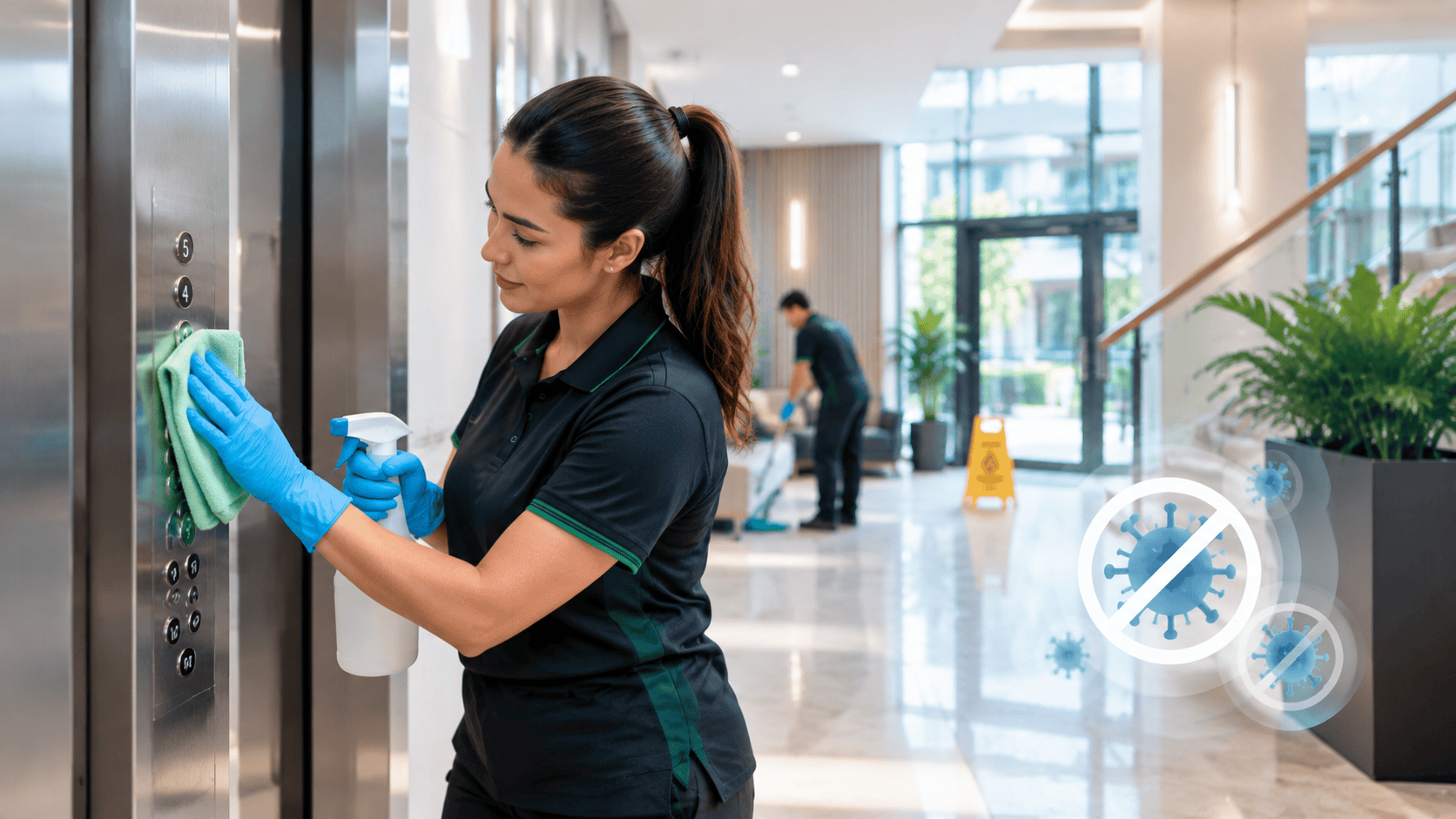
The surfaces touched by the most hands, most often, need the most frequent care. High touch point cleaning focuses effort where it does the most good.
| Area | Touch points | Standard schedule | Flu season schedule |
| Lifts | Call buttons, internal panel, handrail | 2 to 3 times a week | Daily |
| Entry | Door handles, push plates, intercom, fob reader | 2 to 3 times a week | Daily |
| Letterboxes | Box fronts, parcel locker keypad | Weekly | 2 to 3 times a week |
| Stairwells | Handrails, fire door handles | Weekly | 2 to 3 times a week |
| Shared gym | Equipment grips, benches, taps | 2 to 3 times a week | Daily |
These are starting points. A 150-unit tower in Blacktown will need more than a 12-unit walk-up.
How often should common area cleaning happen during spring?
Most Sydney buildings do well with a full common area clean two to three times a week, plus daily touch point wipe-downs while flu activity is high. Once NSW Health reports activity dropping back to low, many committees scale the daily visits down again.
Lean towards the heavier schedule for the next four to six weeks if your building has older residents, people receiving care at home, or a recent run of illness.
What do the NSW strata reforms mean for your cleaning schedule?
The reforms don’t set a cleaning frequency, but they make it more important to show that common property is being properly maintained. A written schedule and cleaning log give your committee a clear record.
- Stronger enforcement. NSW Fair Trading can investigate owners corporations that fail to maintain common property.
- Longer window for owners. Lot owners now have six years, up from two, to take action over a failure to repair and maintain.
- Clearer roles. Cleaners are service providers, not building managers, so a cleaning contract doesn’t trigger building manager rules.
This is general information, not legal advice. Your strata managing agent can confirm how the rules apply to your scheme.
Due for a review? Request a strata cleaning quote from Mercy Property Care and we’ll walk the common areas with you first.
How do you choose strata cleaners you can rely on?
Reliable strata cleaners can show you their products, their safety paperwork and a record of every visit.
Before you sign, ask any provider for:
- TGA-listed hospital-grade disinfectants, named by product
- Safety Data Sheets and WHS procedures under the WHS Act 2011
- Colour-coded microfibre, so bin room cloths never touch lift buttons
- Current public liability insurance and a log of every visit
Mercy Property Care offers strata cleaning Sydney committees can check against that list. Our team also cleans medical centres and NDIS homes, so infection control habits come with them. Managing offices too? Read how offices are handling flu season hygiene.
Frequently asked questions
Q: Does strata cover cleaning inside my apartment? A: No. Strata cleaning is paid through levies and covers common property only, such as lifts, foyers, stairwells, bin rooms and car parks. If you want your apartment cleaned, book that privately, separate from the building contract.
Q: Who pays for extra cleaning during flu season? A: The owners corporation pays for common area cleaning from the administrative fund, which comes from strata levies. A committee can usually approve a short-term increase within budget, while larger ongoing changes may need owner approval, depending on the scheme’s rules.
Q: Is disinfecting the same as cleaning? A: No. Cleaning removes dirt, grease and most germs using detergent and water. Disinfecting uses a chemical, such as a TGA-listed hospital-grade disinfectant, to kill remaining germs. Disinfectant works best after a surface is cleaned and must stay on for the contact time on its label before wiping.
Q: Can Mercy Property Care clean strata buildings across Western Sydney? A: Yes. Mercy Property Care cleans strata buildings across Western Sydney, including Parramatta, Blacktown, Quakers Hill and Toongabbie. You can check the full list of suburbs we cover across Western Sydney or look at our cleaning services in Blacktown.
Ready to review your building’s cleaning?
The right strata cleaning plan depends on who uses your building and what NSW Health is reporting. With flu still high this spring, daily touch point care is a sensible step. Request a strata cleaning quote and Mercy Property Care will walk your common areas and suggest a schedule that fits your levies.
Written by Mercy Property Care, Commercial, Strata and NDIS Cleaning Specialists in Western Sydney